

Growing older should bring more peace of mind—not more uncertainty. Elder law weaves together healthcare planning, financial protections, and legal authority so that Massachusetts and Maine families can safeguard their dignity, independence, and security.
From long-term care planning to government benefits and estate protection, elder law ensures that aging individuals can maintain dignity, independence, and security.

Families in Massachusetts and Maine often struggle to navigate the complex rules surrounding Medicaid, nursing home care, and guardianships — all while balancing emotional responsibilities.
At Spinnaker Probate Group, we offer compassionate and clear guidance that helps seniors and their loved ones prepare for the future with confidence.
Compliance We Follow (MA & ME)
- MassHealth financial eligibility (130 CMR 520: look-back & transfers)
- MaineCare LTC rules (DHHS)
- MA Uniform Probate Code (M.G.L. c.190B)
- Maine Probate Code (Title 18-C)
- VA Aid & Attendance (evidence & filing)
- 2025 IRS estate/gift thresholds (monitor annually)
What Does Elder Law Cover for Massachusetts & Maine Residents?
Elder law is a specialized legal field designed to address the challenges seniors and their families face as they age.
In practice, that means navigating Medicaid (MassHealth in MA / MaineCare in ME), Medicare, long-term care contracts, and protective court processes when needed.
Elder law matters often involve incapacity planning, guardianship, healthcare decision-making, and asset preservation. Its scope is broad, covering:
- Healthcare and long-term care planning
- Eligibility for government benefits such as Medicaid and Social Security
- Estate planning through wills and trusts
- Guardianships and conservatorships
- Elder abuse prevention and protection
The ultimate goal of elder law is to provide peace of mind, ensuring that seniors are cared for, families are protected from unexpected financial strain, and legacies are preserved without unnecessary disputes or legal obstacles.
For Massachusetts and Maine residents, proper elder law planning is essential to navigating state-specific benefits, tax rules, and care requirements with confidence.
Long-Term Care Planning for Massachusetts & Maine Families

Massachusetts nursing-home medians are well into six figures; Maine’s are lower but still substantial. We plan based on today’s numbers and re-check them annually.
In Massachusetts, a nursing-home semi-private room averages about $173,375/yr (private $186,515).
In Maine, medians are lower, but still in the six figures. Costs rise annually, so we price plans against today’s numbers and recheck each year.
Cost Reality
Without a plan, nursing home costs can consume a lifetime of savings within a few years. Proactive planning ensures families are not forced to sell homes or liquidate assets just to afford care.
Insurance Options
Long-term care insurance can offset expenses, but not every family qualifies or can afford premiums. In some cases, families choose to self-insure by setting aside assets with legal protections in place.
Medicaid Planning
Medicaid is often the only option for covering long-term nursing care. Proper planning — such as restructuring assets or creating trusts — ensures eligibility while protecting the family home and essential resources.
Veterans Benefits
Qualifying veterans may be eligible for Aid & Attendance benefits, which provide monthly financial assistance to help cover long-term care or in-home services. Elder law attorneys ensure applications are filed correctly and benefits are maximized.
Home Care Alternatives
For many families, the goal is to keep loved ones at home as long as possible. Legal planning can establish structures, such as caregiver agreements or home care trusts, that allow for in-home services while preserving Medicaid eligibility.
If care is imminent (next 30–90 days)
When a move to higher-level care is likely, a clear, time-boxed plan prevents costly mistakes and lost benefits. Here’s the checklist we run with families in Massachusetts and Maine:
- Confirm diagnosis & level of care. Gather recent clinical notes, medication lists, and provider statements to document medical necessity.
- Inventory assets & beneficiaries. Compile account titles, balances, and beneficiary designations; freeze non-essential transfers to avoid look-back issues.
- Refresh decision-making documents. Update/execute Durable Power of Attorney and Health-Care Proxy; sign HIPAA releases so providers can speak with your agents.
- Pre-check Medicaid (MassHealth/MaineCare). Review the 5-year look-back, identify exempt vs. countable assets, and calculate spousal CSRA/MMNA where applicable.
- Decide home strategy. Document intent-to-return, consider a caregiver agreement, and assess lien/recovery risk before any transfer or sale.
- Assemble the application packet. Prepare identity proofs, bank/retirement statements, deeds, insurance details, transaction histories, and any required verifications.
- Calendar key dates. Track recertifications, response windows, and appeal deadlines to protect eligibility and continuity of care.
Medicaid Asset Protection Strategies
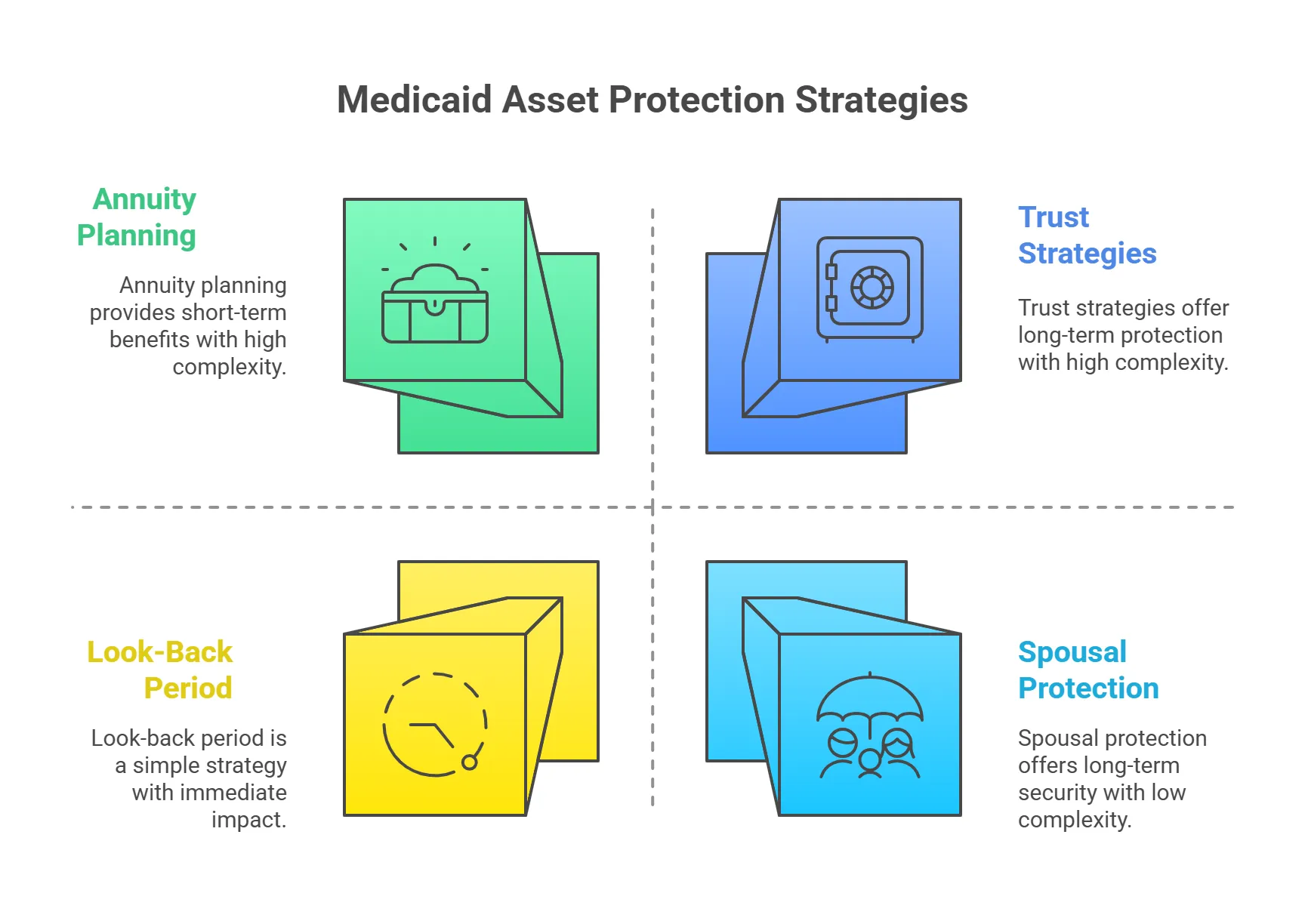
Medicaid is a critical safety net for seniors who require long-term care, but qualifying for it requires careful planning.
By understanding the rules and structuring assets properly, families can protect what matters most while remaining within the law.
Look-Back Period
Five-year review; transfers can trigger penalty months—we model timing and cures before filing.
Exempt Assets
Home (within rules), one vehicle, personal effects, and some pre-paid funerals; classification is everything.
Spousal Protection
Medicaid rules allow a community spouse to retain a portion of assets and income so they are not left destitute while their partner receives care. This is called the Community Spouse Resource Allowance (CSRA).
We calculate CSRA/MMNA for the community spouse and re-verify just before submission.
Trust Strategies
Irrevocable trusts are powerful tools for asset protection. When created within Medicaid’s rules, they preserve family wealth, remove assets from countable resources, and secure eligibility for care.
Annuity Planning
Certain annuities can legally convert countable assets into income streams. This strategy can protect savings while ensuring Medicaid eligibility, especially for married couples.
Guardianship and Conservatorship

When seniors lose the ability to make decisions and no planning documents are in place, families may need to seek court-appointed guardianship or conservatorship.
This ensures loved ones are legally protected, but the process can be complex.
Massachusetts uses M.G.L. c.190B Article V; Maine uses Title 18-C, Article 5.
When Guardianship is Needed
Cognitive decline, dementia, or sudden incapacity without powers of attorney or healthcare directives often triggers the need for guardianship or conservatorship.
Types of Guardianship
- Guardian of the Person: Makes decisions about healthcare, housing, and personal needs.
- Guardian of the Property (Conservator): Manages the senior’s finances, investments, and assets.
The Legal Process
Courts require notice, medical evidence, and proposed powers tailored to the person’s needs; limited guardianships are favored where appropriate.
Alternatives
Whenever possible, alternatives such as supported decision-making agreements or updated planning documents can avoid guardianship, offering flexibility without court involvement.
We explore protective arrangements and supported decision-making before court control.
Ongoing Responsibilities
Court-appointed guardians must provide annual reports and financial accountings to ensure transparency and protect the senior’s rights.
Facing long-term care, guardianship, or elder abuse concerns? Our attorneys guide families in Massachusetts and Maine with clarity and compassion.
Elder Abuse Protection
Elder abuse can take many forms, from financial exploitation to neglect or denial of healthcare rights. Elder law attorneys provide tools for prevention, swift intervention, and recovery.
Financial Exploitation
Seniors are vulnerable to scams, undue influence, and misuse of power of attorney. Legal safeguards help recover assets and prevent future exploitation.
Healthcare Advocacy
Attorneys enforce patient rights and healthcare directives to ensure seniors receive proper treatment and dignity in care.
Capacity Assessments
When decision-making ability is in doubt, attorneys coordinate medical and legal evaluations to protect seniors while preserving autonomy whenever possible.
Family Mediation
Conflicts over caregiving, finances, or housing can harm relationships. Mediation offers a structured and compassionate path to resolution, avoiding prolonged litigation.
Medicare and Healthcare Issues
Navigating Medicare and healthcare law is overwhelming, especially when disputes or denials arise. Elder law attorneys guide families through the system and enforce rights.
Medicare Supplement Planning
Advising on supplemental insurance and claims helps seniors cover what Medicare does not, reducing out-of-pocket costs.
Enforcing Healthcare Directives
Attorneys ensure hospitals and providers honor living wills and healthcare proxies, preventing confusion or disregard of a senior’s expressed wishes.
HIPAA Compliance
Families often require access to medical information to coordinate care effectively. Attorneys structure HIPAA authorizations to ensure legal access while complying with privacy laws.
Insurance Disputes
When claims are denied or coverage is reduced, legal intervention can help secure appeals and protect seniors’ access to necessary healthcare.
Why Choose Spinnaker Probate Group for Elder Law Services?
Elder law is about more than documents — it’s about protecting people. At Spinnaker Probate Group, we understand the emotional weight families carry when facing long-term care costs, guardianship decisions, or the fear of elder abuse.
Our role is to simplify the legal complexities so seniors can focus on living with dignity and families can focus on care, not conflict.
Local Knowledge in Massachusetts & Maine
With different state laws on estate tax, Medicaid eligibility, and guardianship, you need attorneys who understand the nuances of both the Massachusetts and Maine systems. We tailor every plan to meet your state’s unique requirements.
Compassionate, Family-Centered Guidance
We don’t just prepare documents — we listen. Whether you’re planning for future care, updating estate documents, or addressing immediate concerns, our approach is rooted in empathy and respect for seniors and their loved ones.
Proven Asset Protection Strategies
Our team helps families shield homes, retirement savings, and business assets from unnecessary taxes or nursing home costs, ensuring wealth is preserved for future generations.
Full-Service Support
From long-term care planning and Medicaid eligibility and healthcare advocacy, we provide comprehensive elder law services — we help coordinate every piece of your plan.
Don’t wait for a crisis. Schedule your elder law consultation with Spinnaker Probate Group now and protect your loved one’s future with confidence.
