

Without a will or power of attorney, families in Massachusetts and Maine can be left facing legal battles, financial chaos, and heartbreaking disputes during already stressful times.
A will ensures your assets are distributed, when you pass, according to your wishes when it goes through the probate process, while powers of attorney safeguard your financial decisions while you are alive if you become unable to act for yourself.

Together, they create a safety net that prevents confusion, preserves dignity, and shields loved ones from unnecessary court involvement.
At Spinnaker Probate Group, we design wills and powers of attorney that are legally sound, tailored to your unique needs, and built to give your family peace of mind.
Massachusetts vs. Maine: Quick Facts
- Witnesses for a will: Both states require 2 witnesses. MA & ME allow “interested” witnesses (beneficiaries), but there are consequences.
- Holographic (handwritten) wills: MA does not recognize unwitnessed holographic wills; ME does if the signature and material portions are in the testator’s handwriting.
- Self-proving wills: Optional in both states (notarized affidavits allow the court to accept the will without live witness testimony).
Why it matters: these differences affect signing ceremonies, how easily the court accepts your will, and how your medical agents are empowered.
Last Will and Testament Essentials for Massachusetts & Maine Families
A Last Will and Testament is the cornerstone of every estate plan. It provides clear instructions on how your assets should be handled after death and gives your family guidance when they need it most.
While powerful, a will also has significant limitations that families should be aware of.
Important: a will governs probate assets. Joint accounts, beneficiary-designated assets (401(k), life insurance), and properly titled trust assets pass outside the will by operation of law.
What a Will Does
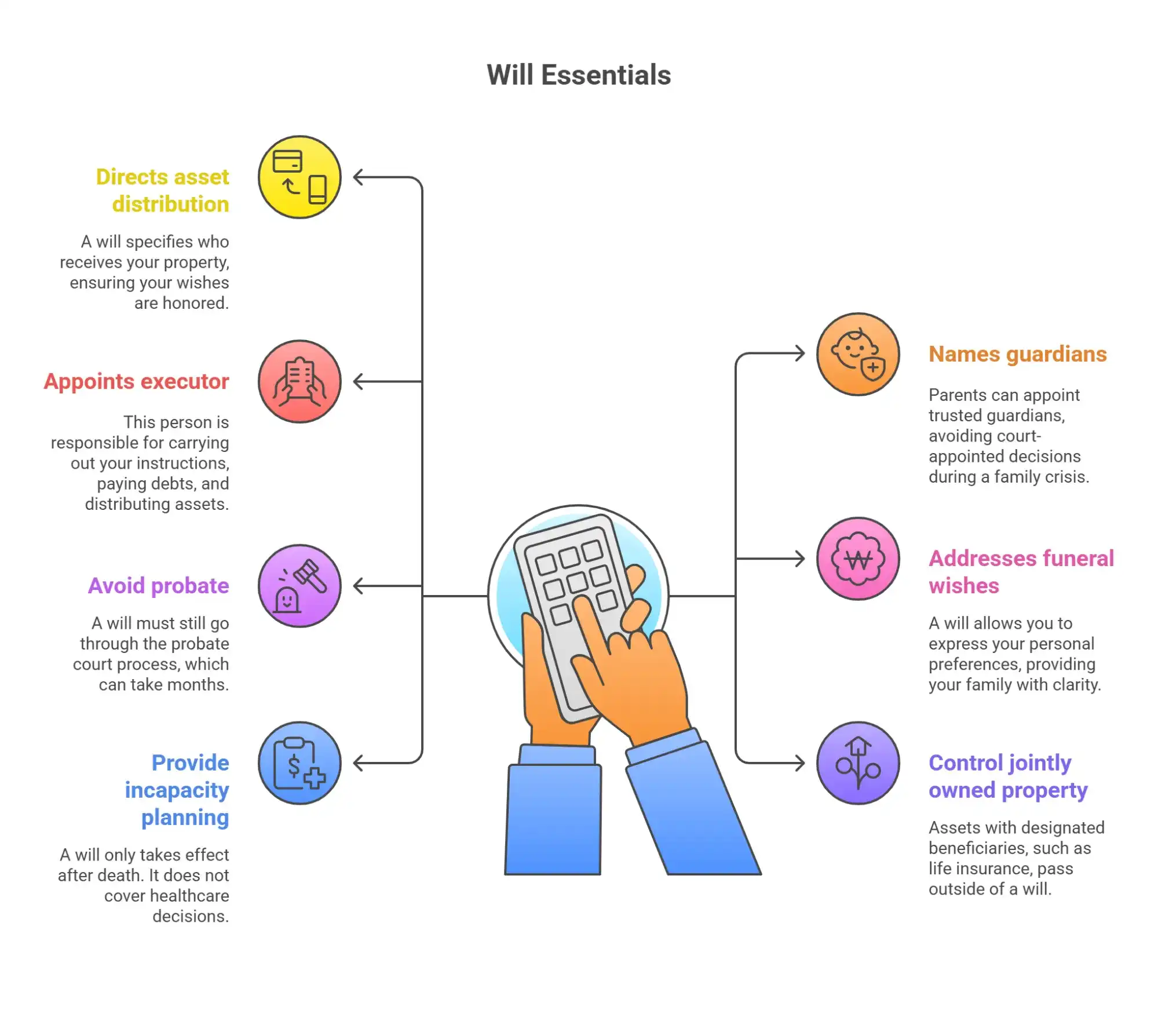
- Directs asset distribution: A will specifies who receives your property, ensuring your wishes are honored instead of leaving decisions to state law.
- Names guardians for minor children: Parents can appoint trusted guardians, avoiding court-appointed decisions during a family crisis.
- Appoints a personal representative (executor): This person is responsible for carrying out your instructions, paying debts, and distributing assets.
- Addresses funeral and burial wishes: A will allows you to express your personal preferences, providing your family with clarity during a difficult time.
What a Will Cannot Do (and common misunderstandings)
- Avoid probate: A will must still be allowed by the probate court in MA and ME (informal or formal). Mass.gov
- Control non-probate assets: Jointly owned property, TOD/POD accounts, retirement plans, and insurance with named beneficiaries bypass the will.
- Provide incapacity planning: A will takes effect after death, not during incapacity—use POAs/healthcare documents for that.
- Fix bad execution: If witness or execution formalities are wrong, the will can be rejected even if it states your true wishes. malegislature.gov
Massachusetts vs. Maine Will Requirements
Will requirements vary by state, and families in Massachusetts and Maine must follow specific rules to ensure a will is legally valid.
The most significant differences involve witness rules, notarization, and the acceptance of handwritten wills.
Requirement | Massachusetts | Maine |
Age | 18+ | 18+ (or married/emancipated) |
Capacity | Of sound mind at signing | Understands the act & consequences |
Witnesses | 2 witnesses to the signing or acknowledgment | 2 witnesses present simultaneously |
Interested witnesses? | Allowed, but a gift to that witness (or their spouse) is void unless there are 2 other disinterested witnesses or the witness proves no fraud/undue influence. | Allowed; an interested witness does not invalidate the will. |
Notarization | Not required; self-proving affidavit strongly recommended. (Mass.gov) | Not required; self-proving affidavit available. (legislature.maine.gov) |
Holographic wills | Not recognized if unwitnessed. | Recognized if signature & material portions are in the testator’s handwriting (witnesses optional). (legislature.maine.gov) |
How to Make a Will “Self-Proving”
A short, notarized affidavit signed with your witnesses allows the court to accept the will without calling your witnesses later—speeding up the probate process and reducing costs. Available in both states.
Informal vs. Formal Probate in Massachusetts
- Informal probate (magistrate-approved) can be opened as early as 7 days after death if the file is clean (proper notice, original will, competent heirs, no objections). It’s typically faster and administratively easier. Mass.gov
- Formal probate (judge-supervised) is used when there are disputes, minors/incompetent heirs, or legal uncertainties. Expect more time and procedure.
Powers of Attorney and Advanced Healthcare Directives
A power of attorney ensures that your affairs are managed if you become unable to make decisions on your own.
Financial Power of Attorney (POA): Lets your agent manage money, property, and business matters. In MA, to be “durable” during incapacity, your POA must include durable wording (or springing language). Notarization is not strictly required by statute, but it is strongly recommended and often necessary for real estate or bank acceptance.
Healthcare Proxy / Health-Care POA: Names someone to make medical decisions if you can’t. MA uses a Health Care Proxy (written, signed, 2 witnesses); ME uses an Advance Health-Care Directive/POA for health care (written, signed, 2 witnesses, in-person signatures). Healthcare decision laws: MA Health Care Proxy (c.201D); ME Advance Health-Care Directives (18-C §5-803). malegislature.gov
Financial Power of Attorney
A financial power of attorney authorizes someone you trust (an “agent”) to manage your property and financial matters.
Durable vs. springing: Durable = effective now and continues through incapacity; springing = activates upon certified incapacity. (MA requires specific durable/springing language.)
Scope: Banking, investments, taxes, real estate, business interests. Some powers (such as gifting and trust changes) may require express authorization.
Execution practice: Sign with a notary (and witnesses if an institution asks). For real estate, record where required by the registry of deeds.
Fiduciary duty: Agents must act in your best interests and keep records.
Healthcare Power of Attorney
A healthcare power of attorney — often called a healthcare proxy — designates someone to make medical decisions if you cannot.
- Medical Decisions: Treatment options, surgery consent, and facility choices.
- HIPAA Authorization: Grants your agent access to otherwise confidential medical information.
- End-of-Life Wishes: Addresses life support, comfort care, and other critical choices.
- Agent Qualifications: Ideally, someone who understands your values and healthcare preferences.
Advanced Healthcare Directives
Massachusetts: No statute for a “living will,” but you can state preferences (often via a Personal Directive) and use MOLST for active, medical orders in serious illness.
Maine: Statutory Advance Health-Care Directive with an optional state form; signatures by principal + 2 witnesses (in-person; not electronic).
These documents provide additional clarity by outlining your wishes for treatment in advance.
- Living Will: States specific treatment preferences if you cannot communicate.
- DNR Orders: Do Not Resuscitate instructions guide providers in life-threatening situations.
- MOLST Forms: Medical Orders for Life-Sustaining Treatment; typically used for advanced illness.
- Organ Donation: Allows you to declare anatomical gifts to help others.
Don’t leave your loved ones guessing. Contact Spinnaker Probate Group today to create or update your will and powers of attorney.
Updating Your Wills and Powers of Attorney

Estate planning documents are not “one and done.” To stay effective, wills and powers of attorney must be reviewed regularly and updated as your life, family, and the law change.
Failing to update can leave loved ones vulnerable and your wishes unprotected.
When to Review Your Documents
Experts recommend reviewing your documents at least every 3–5 years — or sooner if major life events occur, such as:
- Marriage, divorce, or death of a spouse, partner, or named beneficiary
- Birth or adoption of children or grandchildren
- Significant asset changes such as buying a home, selling a business, or receiving an inheritance
- Changing your state of residence, since laws differ in Massachusetts, Maine, and beyond
Warning Signs Your Documents Are Outdated
Even without a major life change, certain red flags indicate it’s time for an update:
- Your named agents (executors, trustees, or healthcare proxies) have died, moved away, or become estranged
- State or federal laws have changed significantly, impacting tax or healthcare planning.
- Your personal wishes or family dynamics have evolved over time.
- Your documents were originally created in another state and may not comply with the requirements of Massachusetts or Maine.
Perfect Signing Ceremony: 7-Step Checklist
- Confirm capacity and the document titles.
- Testator/principal signs in front of two witnesses (both present).
- Each witness signs in the testator’s presence (and in the presence of one another in ME).
- Execute self-proving affidavits with a notary (strongly recommended).
- For POA: include durable/springing language (MA) and notarize. Mass.gov
- Give agents the final signed copies + HIPAA release.
- Store originals safely; note their location for your personal representative.
Common Mistakes to Avoid in Wills, Trusts and Powers of Attorney
Even well-intentioned plans can fail if not executed correctly. Families in Massachusetts and Maine often encounter avoidable problems when documents are incomplete, outdated, or improperly structured. These are the most common pitfalls:
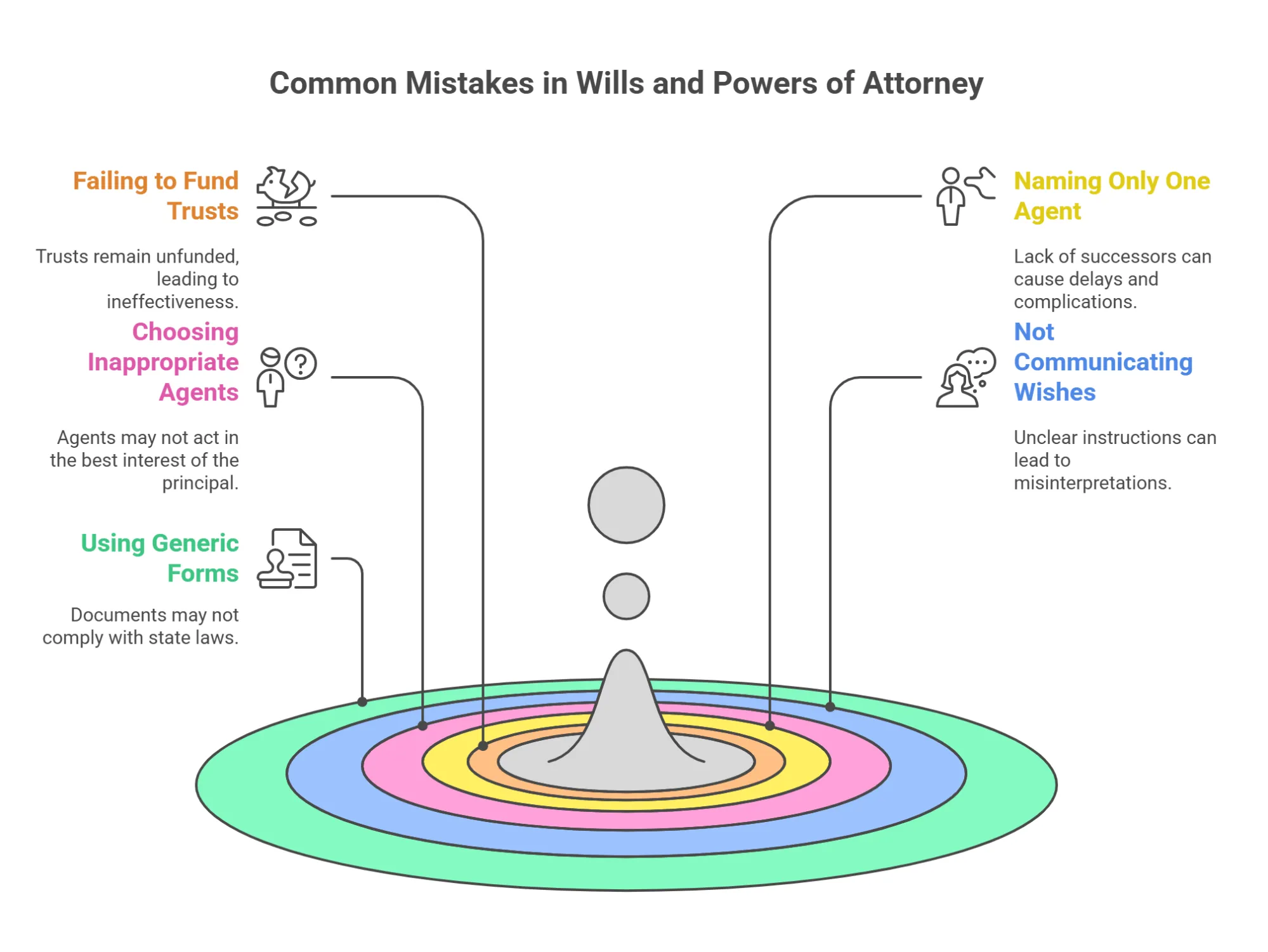
Failing to Fund Trusts With Actual Assets
A trust is only effective if assets are retitled into it. Leaving property outside the trust means it will still go through probate, undermining your goals.
Naming Only One Agent Without Successors
If your chosen executor or power of attorney becomes unable to serve, and no successor is named, your family may face delays and costly court intervention.
Choosing Inappropriate Agents
Agents must be trustworthy and capable. Selecting someone without the necessary financial, organizational, or healthcare decision-making skills can lead to conflict or mismanagement.
Not Communicating Wishes Clearly
Even the best documents may confuse if your family or agents are unaware of your intentions. Open communication ensures smoother transitions and fewer disputes.
Using Generic Forms Instead of State-Specific Documents
Online templates or generic forms often fail to meet the legal requirements of Massachusetts or Maine. Custom, state-specific documents drafted by an attorney are the safest way to protect your wishes.
Using an interested witness without safeguards (MA):
Can void the gift to that witness/spouse unless there are two disinterested witnesses or proof of no fraud/undue influence.
Why Choose Spinnaker Probate Group for Wills & Powers of Attorney?
A will or power of attorney is more than paperwork — it’s peace of mind for your family.
At Spinnaker Probate Group, we combine legal precision with compassionate guidance to ensure your wishes are honored and your loved ones are protected.
State-Specific Knowledge
We understand the differences in Massachusetts and Maine laws, ensuring every document is compliant and enforceable.
Personalized Planning
No two families are alike. We tailor wills and POAs to your unique circumstances, family dynamics, and long-term goals.
Preventing Common Mistakes
We help you avoid pitfalls like unfunded trusts, outdated agents, or generic forms that could leave your family vulnerable.
Full-Service Support
From drafting and execution to ongoing updates, our team ensures your documents remain current and effective.
Take control of tomorrow by acting today. Schedule your consultation with Spinnaker Probate Group and gain peace of mind for the future.
