

Your life’s work deserves more than uncertainty — it deserves lasting protection.
Trust administration is about more than legal formalities; it’s about ensuring your family’s financial security for years, decades, or even generations.
In Massachusetts and Maine, trustees must navigate tax filings, asset management, and fiduciary duties that demand precision and accountability.
Without guidance, even well-structured trusts can create disputes or financial risk.
At Spinnaker Probate Group, we help trustees fulfill their responsibilities with care, compassion, and adherence to compliance standards.
Our role is to simplify the process, reduce conflict, and protect the legacy that matters most to you and your loved ones.
Compliance We Follow in MA & ME
- Massachusetts Uniform Trust Code (M.G.L. c. 203E)
- Massachusetts Prudent Investor Act (M.G.L. c. 203C)
- Maine Uniform Trust Code / Maine Probate Code (Title 18-C)
- Trustee duty to inform and account (UTC-modeled notice & reporting)
- IRS Form 1041 & Schedule K-1; applicable state fiduciary returns
What Does Trust Administration Mean for Families?
Trust administration is the ongoing process of managing assets placed into a trust by a trustee for the benefit of designated beneficiaries.
It ensures that wealth, property, and investments are preserved, debts and taxes are managed correctly, and distributions are made in accordance with the trust document.
Unlike probate, which is court-supervised and often time-limited, trust administration is a continuing responsibility.
It may begin immediately after the trust creator’s passing and can last for years, decades, or even multiple generations.
For families, this means stability and peace of mind — provided the trustee fulfills every obligation with accuracy and integrity.
Duration of Trust Administration
Trusts can be designed to last a few years, several decades, or even multiple generations. For example:
- A short-term trust might provide for minor children until they reach adulthood.
- A long-term trust could manage investment income for beneficiaries across multiple decades
- A dynasty trust may last for generations, ensuring family wealth is preserved far into the future.
Due to these timelines, trustees must consider long-term benefits. Their decisions can impact not only today’s beneficiaries but also future heirs who depend on the trust’s careful management.
Fiduciary Duty of a Trustee
At the heart of trust administration is the fiduciary duty. This legal and ethical standard requires trustees to act solely in the best interests of beneficiaries.
They must avoid conflicts of interest, remain impartial when multiple heirs are involved, and always prioritize fairness and accountability.
Failure to uphold fiduciary duty can expose trustees to legal claims, financial liability, and the loss of family trust.
That’s why many families in Massachusetts and Maine choose to work with experienced professionals who can provide trustees with guidance, oversight, and protection against mistakes.
What Massachusetts & Maine Trustees Must Do in the First 30–90 Days
Serving as a trustee starts with a clear, time-bound plan. In the first 30–90 days, we help you:
- Obtain/confirm EIN; open accounts. Keep trust funds separate and auditable.
- Provide required beneficiary notices with a plain-English summary of relevant terms.
- Marshal and retitle assets; set valuation strategy and timelines.
- Work with your financial advisor to adopt an Investment Policy Statement (IPS) consistent with prudent-investor rules.
- Establish an accounting cadence and document-retention standards that are court-ready for accountings.
- Determine tax posture; calendar 1041/K-1 preparation and any state fiduciary filings.
- Set an interim distribution policy and document discretionary criteria for fairness.
Duration of Trust Administration
Trusts can be designed to last a few years, several decades, or multiple generations:
- Short-term trusts can provide for minor children until they reach adulthood.
- Long-term trusts can manage income and principal for beneficiaries over several decades.
- Dynasty trusts may preserve family wealth for future heirs.
Because timelines vary, trustees must weigh decisions not only for today’s beneficiaries but for those who will rely on the trust years from now.
Required Notices, Accountings & Reports (and When They’re Due)
Beneficiaries deserve clarity. We prepare and deliver:
- Initial acceptance & information notices to qualified beneficiaries.
- Periodic accountings showing receipts, disbursements, fees, and investment activity.
- A year-end trustee letter summarizing performance, significant decisions, and next-year priorities.
These touchpoints reduce misunderstandings, promote transparency, and protect the trustee’s credibility.
Fiduciary Duty of a Trustee
At the heart of trust administration is the fiduciary duty to act solely in the best interests of the beneficiaries, avoid conflicts of interest, remain impartial when multiple heirs are involved, and document decisions with care.
Breaches can create legal exposure and erode family trust.
Many families in Massachusetts and Maine choose professional support to provide guidance, oversight, and protection against costly mistakes.
Trustee Duties and Responsibilities
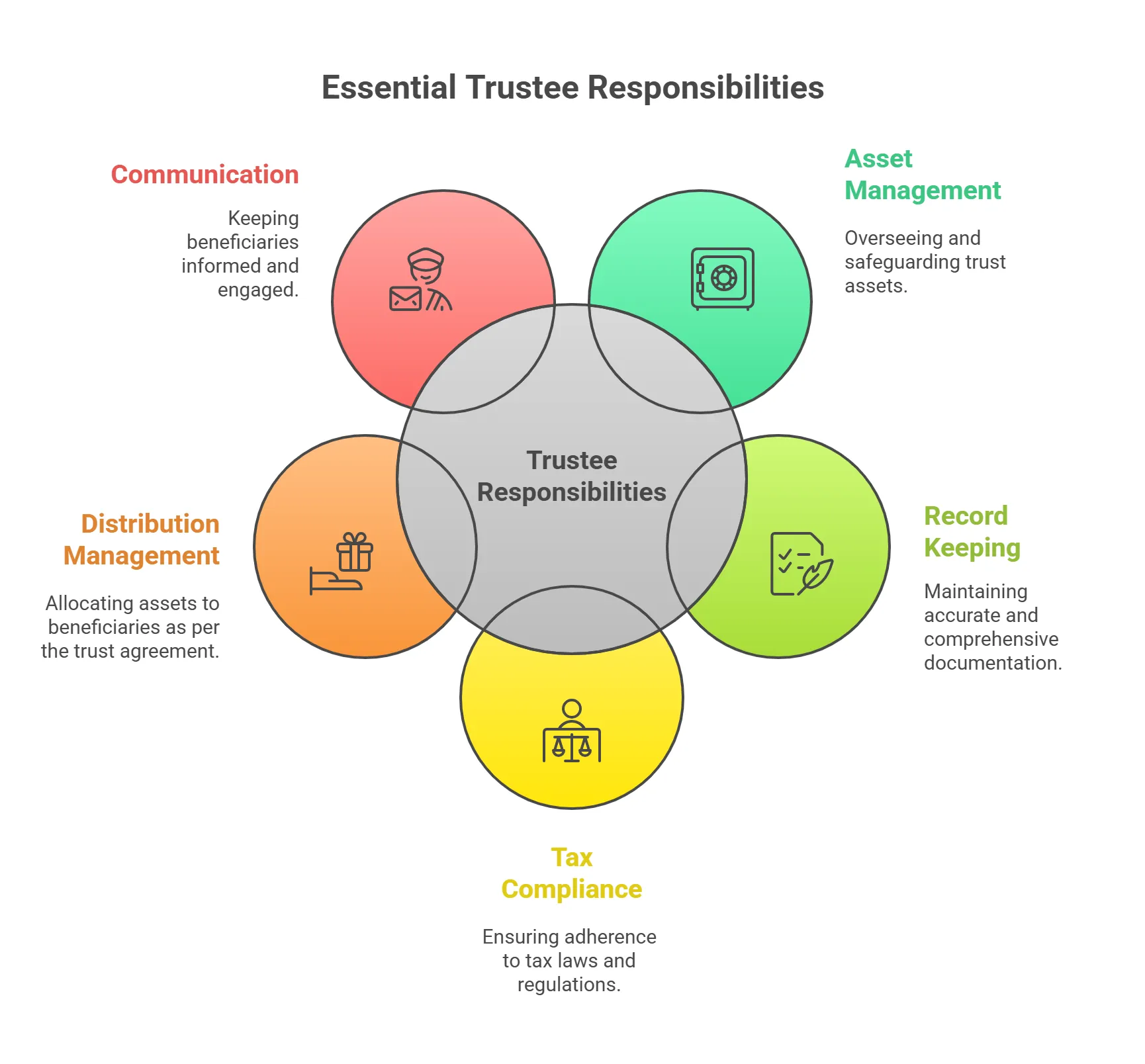
Serving as a trustee is more than an honor — it is a legally binding responsibility. Trustees are expected to manage assets diligently, comply with state and federal requirements, and communicate appropriatly with beneficiaries.
Each duty carries significant weight, as even minor oversights can lead to delays, disputes, or financial loss.
Asset Management
Trustees must oversee all assets within the trust, including real estate, business interests, investments, and personal property.
This involves making sound financial decisions, maintaining property in good condition, and ensuring investments are managed prudently.
The trustee’s goal is to preserve value while generating growth that benefits beneficiaries both now and in the future.
Record Keeping
Every transaction, expense, and distribution must be carefully documented. Trustees are often required to provide beneficiaries with formal accountings, and incomplete or sloppy recordkeeping can raise suspicion or lead to legal challenges.
Detailed records not only create transparency but also protect trustees against claims of mismanagement.
Tax Compliance
Trusts are subject to annual tax filings, including trust-level returns and beneficiary reporting. Trustees must ensure these are filed accurately and on time to avoid penalties.
This responsibility often requires coordinating with accountants or attorneys familiar with estate and trust taxation. Proper tax compliance is critical for protecting the trust’s long-term value.
Distribution Management
Distributions must be made in accordance with the trust document exactly. Some trusts require periodic income payments, while others allow for discretionary distributions based on a beneficiary’s needs.
Trustees must balance compassion with adherence to the law, ensuring they don’t favor one heir over another or stray from the trust’s original terms.
Communication
Beneficiaries have the right to know how the trust is being managed. Trustees are expected to provide regular updates, share financial accounts, and respond to reasonable inquiries.
Clear communication fosters trust and reduces the likelihood of disputes, especially when multiple heirs or complex family dynamics are involved.
Common Trust Administration Issues in Massachusetts & Maine
Even the most carefully drafted trust can encounter challenges during administration. Trustees must navigate financial decisions, family dynamics, and legal obligations, often under pressure and scrutiny.
Professional support helps prevent costly errors and ensures the trust’s purpose is fulfilled.
Investment Decisions and Portfolio Management
Trustees are responsible for safeguarding and growing the trust’s assets. This may include managing real estate, balancing an investment portfolio, or making decisions that affect long-term returns.
Poor investment choices can reduce the trust’s value, while strategic management helps preserve wealth across generations.
Beneficiary Disputes
Conflicts often arise when beneficiaries disagree about distributions or the interpretation of trust terms.
These disputes can fracture families and delay administration. Clear communication and legal guidance ensure trustees apply the trust fairly and resolve disagreements with transparency.
Tax Optimization Strategies
Trust taxation is complex, and mistakes can erode the trust’s value. Trustees must not only file annual returns but also consider strategies to minimize taxes for both the trust and beneficiaries.
Professional advice helps identify opportunities for lawful tax savings while ensuring full compliance.
Trust Modifications
Life circumstances change — whether through marriage, divorce, disability, or shifting financial needs. While some trusts are flexible, others may require court approval for modification.
Trustees must know when and how updates can be legally pursued to align with evolving family needs.
Successor Trustee Transitions
When the original trustee steps down or passes away, a successor trustee must assume the responsibilities. This transition can cause delays or confusion if not handled properly.
Precise planning and legal oversight ensure a smooth transfer of duties without disrupting the administration.
Avoid costly mistakes and family conflict. Contact Spinnaker Probate Group today for clear answers and reliable support with trust administration.
Trust Taxes & Filings
- Estate/Inheritance Tax: Thresholds and portability differ by state. We link you to current guidance and tailor distribution timing accordingly.
- Fiduciary Returns: Filing triggers vary. We determine resident/nonresident trust status and calendar obligations to avoid penalties.
- Situs & Administration: We evaluate whether changing situs is sensible, practical, and consistent with trust terms and family goals.
- Real Property: Local recording, transfer taxes, and timelines can significantly impact distribution strategies and long-term planning.
Types of Trusts We Administer in Massachusetts & Maine

Different trusts serve different purposes. Choosing the right structure is essential for achieving financial security, protecting assets, or advancing charitable goals.
At Spinnaker Probate Group, we help you administer a wide range of trusts tailored to meet the unique needs of families.
Revocable Living Trusts
These flexible trusts enable individuals to maintain control over their assets during their lifetime while avoiding probate upon death. They are ideal for families who want privacy, efficiency, and adaptability in their estate planning.
Irrevocable Trusts
Once established, these trusts cannot easily be changed. They are often used for asset protection and tax advantages, helping families preserve wealth while minimizing exposure to estate taxes or creditor claims.
Special Needs Trusts
Designed to support individuals with disabilities, these trusts ensure beneficiaries receive supplemental financial support without jeopardizing their eligibility for government benefits. Trustees must carefully follow rules to protect both assets and benefits.
Charitable Trusts
Charitable trusts allow families to align their legacy with philanthropic goals. They provide tax advantages while supporting causes that matter most, ensuring generosity continues for years to come.
When to Seek Professional Help with Trust Administration
Trust administration is rarely simple — and the stakes are high. Trustees are legally accountable for every decision, and even minor missteps can create tax penalties, family disputes, or personal liability.
Knowing when to seek professional support can protect both the trust and the trustee.
Complex Investment Decisions
Trustees often face decisions about real estate, business interests, or investment portfolios.
If the trust includes assets beyond the trustee’s expertise, professional advisors ensure strategies align with fiduciary duties and long-term goals.
Beneficiary Conflicts
Disputes between beneficiaries can quickly escalate, especially over distributions or perceived favoritism.
Neutral legal guidance provides structure, mediates disagreements, and helps preserve family relationships during emotionally sensitive times.
Tax Complications
Trust taxation is notoriously complex. Mistakes in filings or overlooked tax strategies can erode the trust’s value.
Working with professionals ensures compliance while identifying lawful opportunities to minimize the tax burden on both the trust and beneficiaries.
Trust Document Interpretation
Trust language can be highly technical and open to different interpretations. Attorneys help trustees understand the document’s intent, avoid misapplication of terms, and ensure distributions are carried out correctly under the law.
Trustee Liability Concerns
Trustees may be held personally responsible for errors, mismanagement, or missed deadlines.
Professional oversight offers both guidance and protection, reducing risk while ensuring that trustees meet their fiduciary obligations.
Your loved one’s legacy deserves careful protection. Schedule a consultation with Spinnaker Probate Group now and ensure your trust is managed with precision and care.
